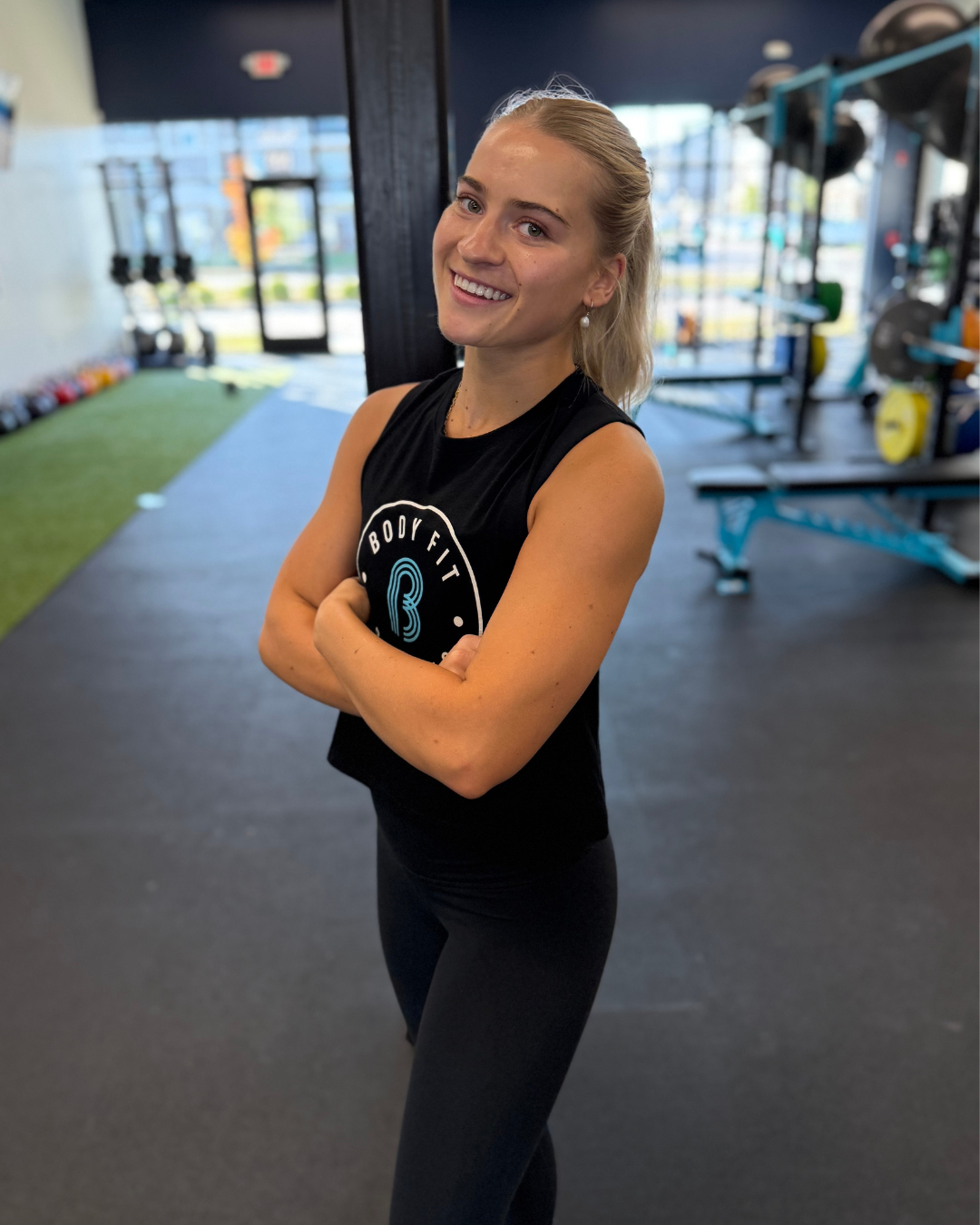
Covey
Covey is a certified Pilates and group fitness instructor at BFT Westfield with a background in dance and functional training. She’s passionate about helping clients build strength, move well, and feel confident in their bodies. Her coaching style is supportive, high-energy, and focused on form — helping every member get the most out of each session.
Top 5 Questions Covey Is Asked
#1 - Why is lower-body strength important?
Lower-body strength is crucial because it supports almost every movement you do, walking, lifting, climbing stairs, and staying active without pain. Strong legs and glutes improve balance, stability, and posture while protecting your knees, hips, and lower back from injury. It also boosts athletic performance by helping you move with more power and speed. Since your lower body
contains large muscle groups, building strength there increases metabolism and supports a healthier body composition. Overall, it keeps you strong, mobile, and confident.
#2 - How to build lower body strength?
You can build lower-body strength by focusing on compound exercises that target major muscle groups, such as the quads, hamstrings, glutes, and calves. Movements such as squats, lunges, deadlifts, step-ups, and hip thrusts are highly effective. Aim for 2–3 strength-focused workouts per week, gradually increasing the weight or intensity. Adding resistance bands, kettlebells, or dumbbells can boost challenge and results. Consistency, progressive overload, and proper form
are key to building strength safely and effectively.
#3 - Do women have more lower-body strength?
Women generally have a higher proportion of lower-body strength compared to upper-body strength, especially relative to their total body weight. While men typically have more overall muscle mass, women tend to store more strength and power in the hips, glutes, and legs. This is partly due to biomechanics, muscle distribution, and hormonal differences. As a result, women often excel in lower-body endurance and stability exercises. However, individual strength varies widely based on training, experience, and genetics.
#4 - How to test lower body strength?
You can test lower-body strength using simple, reliable assessments that measure power, endurance, and stability. Common tests include the sit-to-stand test, where you count how many times you can stand from a chair in 30 seconds, and the wall sit hold, which measures how long you can maintain the position. Strength-focused tests like a 3–5 rep max squat or trap-bar deadlift can gauge maximal strength if you have experience and proper form. Tracking these metrics over time shows clear progress.